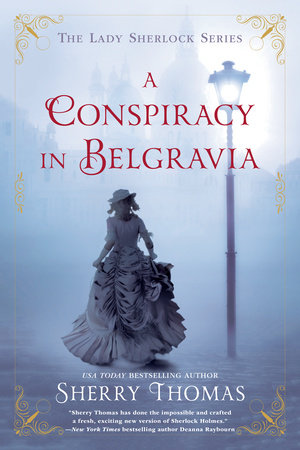
Book No. 19 of 2020
The premise of the Lady Sherlock series is simple but winning: the classic characters of Sherlock Holmes and John Watson, gender-flipped—this creates complications in an environment where well-to-do women have no business operating in the domain of men. So far the series is an enjoyable romp through Victorian-era London with variations on Doyle’s stories, heaped with critique of a society that undervalues women. There’s also a good dose of romantic/sexual tension (more in the first book than the second, though). I do appreciate that Charlotte Holmes, the protagonist, is unabashedly feminine (I get annoyed at the “smart/strong women can’t be girly” trope), and it’s strongly implied that several of the characters are on the spectrum.
I had a mixed experience with this installment; on the one hand, I enjoyed the twists and the use of intricate ciphers in the story, as well as the references and variations on the original stories. On the other hand, I read the first book (A Study in Scarlet Women) about 25 books ago and just didn’t remember all of the details or characters, and the plot of this one relies heavily on what went down in the first book. I spent a great deal of the story struggling to remember why a certain name was so significant, or how various characters were related. (This is largely an expectations thing: I thought the series was a set of standalone mysteries, and it’s very much not.) There are a LOT of characters and I kept finding myself going “wait, who is that?”
Based on the first two books so far, it’s a fun little “variation on a theme” series if you’re into the Sherlock Holmes canon, but it’s probably best to read the whole series in one go or read a plot synopsis of the previous book before starting each next one. The details of Society life are fun and the feminist critiques of the period are validating, if a little heavy-handed sometimes. I do love the many evocative details of London, and the descriptions of food.