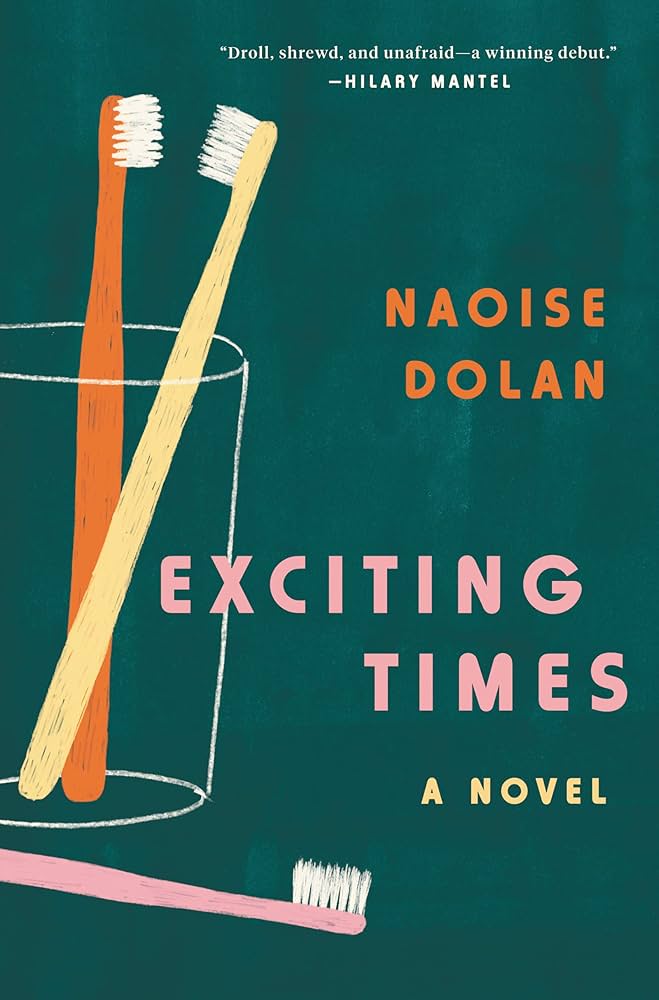
Book No. 70 of 2020
Lots of classic Irish-Millennial-style prose here: very self-doubting internal examination, a detached wryness, long wandering prose sprinkled with quietly incisive and devastating succinct observations on human nature. (What I’m trying to say in so many words is basically that this is Extremely Sally Rooney.)
Lots of keenly observant humor, banter (featuring texts, emails, and heavy Instagram and Facebook usage/cyber-stalking), notes on class politics and the idiosyncrasies of the comfortably rich, the leftover cultural tensions between the U.K. and the remnants of the British Empire, the lead up to Brexit and the Hong Kong protests, and the obsessive, confusing state of parsing your feelings for people inside and outside of relationships. The protagonist is indecisive without being annoying, imho, and her observations of human nature and her own feelings land like small epiphanies.
I admittedly did not love the first part of the book—the imbalanced, emotionally distanced dynamic between the protagonist and one character was not a space I really wanted to occupy, but then the introduction of another character in the second part of the book introduced an element of obsessive infatuation that made the story really compelling, and served to set up the love triangle dilemma (and also juxtaposed the two dynamics).
Similar Reads
This is so similar to Sally Rooney’s writing style that if I’d read it without knowing the author, I would totally think it was Rooney’s third book. There are definitely elements of both Normal People and Conversations With Friends in here.
The obsessive nature of the female-friendship-turned-romantic-relationship reminded me of the Lénu/Lila friendship in Elena Ferrante’s Neapolitan novels, as well as the Miho-Ruby storyline in Frances Cha’s If I Had Your Face.
More insight-through-internal-observation: Milkman by Anna Burns, Outline by Rachel Cusk.