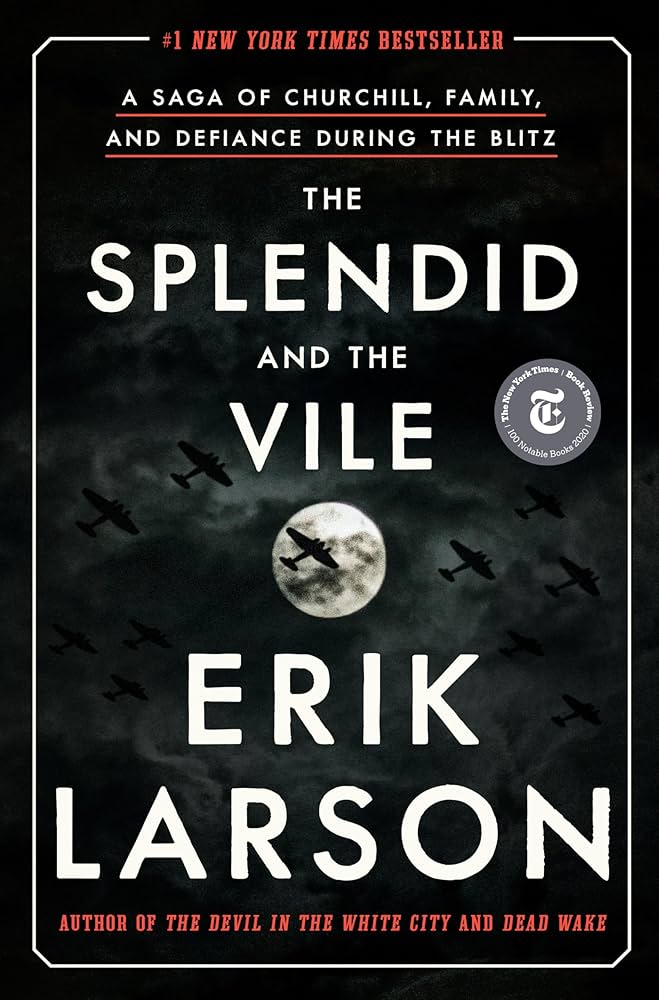
Book No. 6 of 2021
When I told my fiancé I was reading a book about Churchill during WW2 he said, “That’s so unlike you”—and it’s true, I am generally uninterested in books that depict war in the abstract, via battle tactics, generals, and lustful descriptions of machinery.
What makes Splendid such a winner is its approach to the subject: the people are depicted as human, the experiences of civilian life are richly detailed, and so many aspects of life during the Blitz are masterfully shown that it’s staggering. Churchill and Hitler’s decisions are depicted in detail, with the figures around them illuminated clearly, so for the first time I felt like I really understood what was happening, and why. (Also, fascinating to read about WW2 from the British point of view—I realized how little I knew about the war before Pearl Harbor.) Battle tactics are placed in context (why raids happened the way they did, how much things cost, what resources people needed, etc.) and the logistics of governing are illustrated really well.
I really appreciated how the book wasn’t solely about Churchill—Larson generously acquaints the reader with the figures (familial, governmental) around him, what motivated them, how they worked with Churchill, and what they thought about everything.
Also, it was astounding how relatable life during the Blitz was, reading in a Plague Year—so many striking similarities in the way crisis and horror meld with the mundanity of everyday life.
Similar Experiences
The depictions of civilian life reminded me of several of Eva Ibbotson’s novels.
Mentions of the capture of the Channel Islands of course reminded me of The Guernsey Literary and Potato Peel Pie Society.
Was also reminded of several movies I’ve seen recently-ish: Darkest Hour and Monuments Men (still haven’t seen Dunkirk).
Thought vividly of the Churchill War Rooms—multiple visits helped me visualize the goings-on depicted—and London in general. Oh, travel.