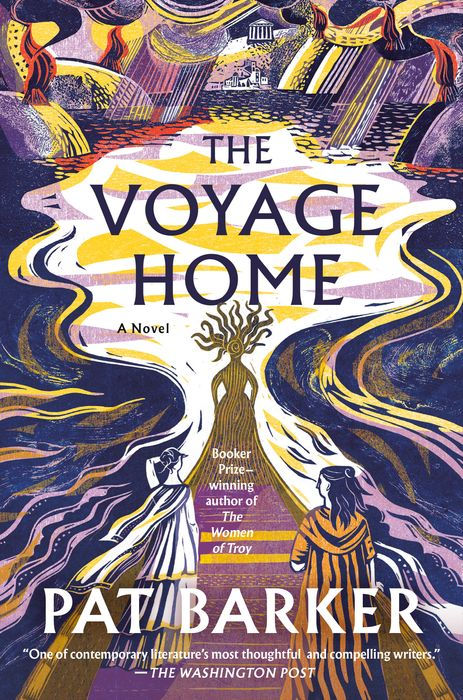
Book No. 37 of 2025
I thought Barker’s first book in this series, The Silence of the Girls, was an incredibly effective story, and a sharp feminist take on The Iliad, while its sequel, The Women of Troy, was so limp it was almost pointless. The Voyage Home lies somewhere in between, I think; it helps that Cassandra’s story, and the entire Fall of the House of Atreus plot, is so rich with women-centric themes and provides a lot of ground to explore the themes that Barker is so good at treading.
The majority of the story is narrated by a character Barker invented in The Women of Troy which I think, frankly, is a bit of a miss—as her entire role is just to observe and be a stand-in for the audience, she has big NPC energy (derogatory) and no amount of backstory or commentary makes up for this. The book is most compelling when we jump to Cassandra or Clytemnestra’s point of view, which raises the question: why didn’t Barker tell the story primarily through those two characters, interspersed with chapters from observer characters? It’s what she did so effectively in The Silence of the Girls.
My other main complaint is that the story is suffused with a Britishness that is so intense it’s jarring; lower-class characters use Cockney slang and there are numerous English cultural references and very heavy use of English nursery rhymes, and the differentiation between “Father” and “Daddy” plays a pivotal role. I totally get that the idea is to use cultural shorthand to convey context and characterization to the reader without getting too explain-y, but the commitment to Extreme Britishness feels so un-Greek that it’s just distracting. (I don’t remember this stylistic choice being as stark in the previous two books.)
I did think that the tilt into the horror genre was great and extremely well-suited to the story—Agamemnon’s palace as haunted house is a brilliant choice, imho—though again, the use of English nursery rhymes to convey horror-movie-creepiness was more distracting than it was effective.
Bonus points for keeping the detail of Clytemnestra rolling out the richly colored tapestries and essentially forcing Agamemnon to commit sacrilege; that was always one of my favorite little bits of the story.
Similar Reads
Natalie Haynes’ The Children of Jocasta is a similarly-themed retelling of an ancient Greek story, and her latest book, Stone Blind, is another women-centric/villainous-woman-redeeming Greek myth take, both of which I enjoyed far more.