Book No. 16 of 2021
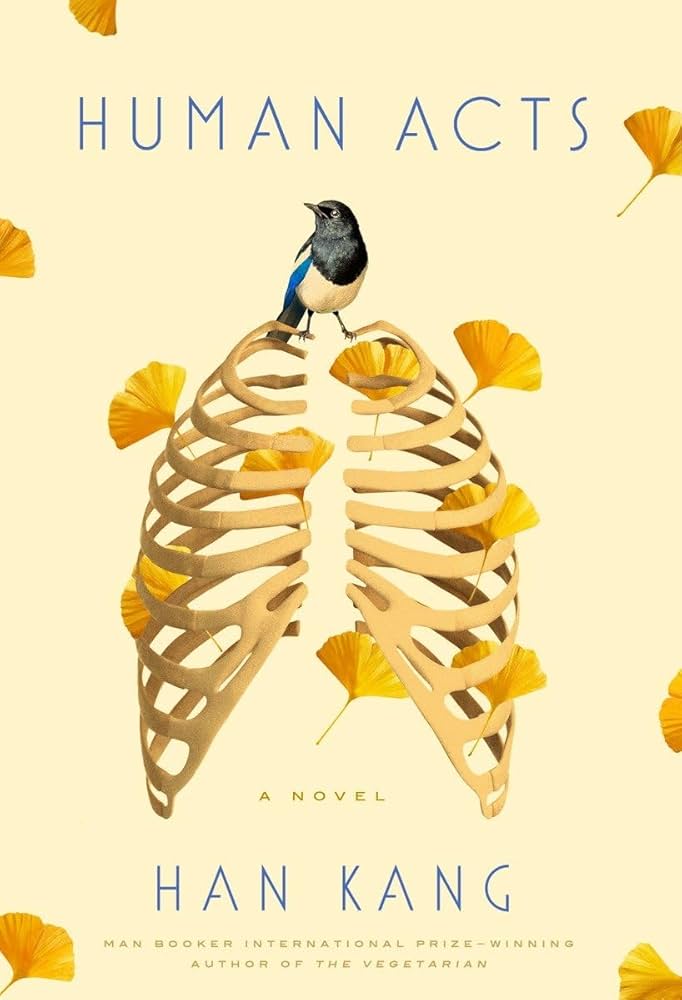
The human body is essentially the leitmotif of this narrative, with all its beautiful and horrific variations: the body whole and healthy, the wounded body healed, the body tortured, the body mutilated, the body disposed, the body exhumed. Throughout the linked stories Han uses immediate, visceral descriptions of the body to convey the monstrosity of the nation’s brutality (with “the nation” being a more abstract concept) during the Gwanju Uprising.
Each of the stories is told by a different narrator, with a deft mix of perspectives (some chapters are in second person, others in various combinations) and tenses. The stories are all linked, and while they all center on the death of one young boy, their peripheral accounts together shine light on the wide-reaching effects of this one event. It is all so devastating and so deeply human. (It’s also very jarring to realize that the Gwanju Uprising, which had such far-reaching, life-altering impact on so many people, was something I didn’t even know happened until I tapped open this book.) Definitely a heavy read, but one with really beautiful storytelling.
Similar Reads
The focus on a bloody chapter of democratization reminded me of Shawna Yang Ryan’s Green Island (a fictional book based on the 228 Massacre).
The theme of history’s haunting of survivors reminds me of one of the stories in Ken Liu’s The Paper Menagerie.